
The best Tokyo hotels near major train stations do more than save a few minutes with your luggage. They shape the rhythm of the entire visit: the first glow of Shinjuku after dark, an early walk toward Sensō-ji, an unhurried train to Kamakura, or a final bowl of ramen before returning to your room. In a city built around extraordinary rail connections, the right station can make Tokyo feel wonderfully immediate rather than overwhelmingly vast.

For many travelers, a hotel within a short walk of a major station is the most practical choice. But Tokyo is not a single experience, and neither are its stations. A base in Shinjuku offers high-energy city life and far-reaching rail access; Ueno opens toward museums, traditional neighborhoods, and northern day trips; Tokyo Station brings historic grandeur and fast intercity travel. The best fit depends on what you want your days and evenings to feel like.
Why a Station-Centered Stay Changes Tokyo
Tokyo’s rail network is one of the city’s great daily rituals. Office workers, students, shoppers, artists, and visitors move through stations that function like miniature cities, filled with food halls, bookstores, underground passages, and the steady musical chime of departing trains. Staying nearby means participating in that dynamic urban life while keeping your itinerary flexible.
It also makes arrival easier. After a long international flight, a complicated transfer and a distant hotel can drain the energy from your first evening. A hotel close to a station lets you settle in, step outside, and begin with something simple and memorable: a lantern-lit alley, a department store basement filled with beautifully prepared food, or a quiet side street where a small neighborhood shrine appears between modern buildings.
Convenience does have a trade-off. Stations such as Shinjuku, Shibuya, and Tokyo are vast. A property described as “near the station” may still be a 10- or 15-minute walk from the specific rail line you need, sometimes through busy crossings or underground corridors. Before booking, look beyond the station name and check the hotel’s walking route, the exit closest to it, and the lines you expect to use most often.
Tokyo Hotels Near Major Train Stations by Neighborhood
Shinjuku Station: For Energy, Nightlife, and Range
Shinjuku is Tokyo at full volume: giant screens, late-night restaurants, elegant hotel bars, tiny yakitori counters, department stores, and the contemplative green expanse of Shinjuku Gyoen nearby. Hotels around Shinjuku Station are ideal for travelers who want to be surrounded by movement and who plan to explore widely across Tokyo.
The station is a valuable launching point for western Tokyo and beyond, including Nakano, Kichijoji, Mount Takao, and day trips toward Hakone. It is also a strong choice for travelers arriving by airport limousine bus, as many larger hotels in the area serve as convenient stops.
The compromise is intensity. Shinjuku can feel crowded, particularly at rush hour, and the station’s many exits can be disorienting. Families, light sleepers, and travelers hoping for a quieter Tokyo may prefer a hotel on the station’s calmer western side or in a neighboring district with straightforward rail access.
Tokyo Station: For First-Time Visitors and Day Trips
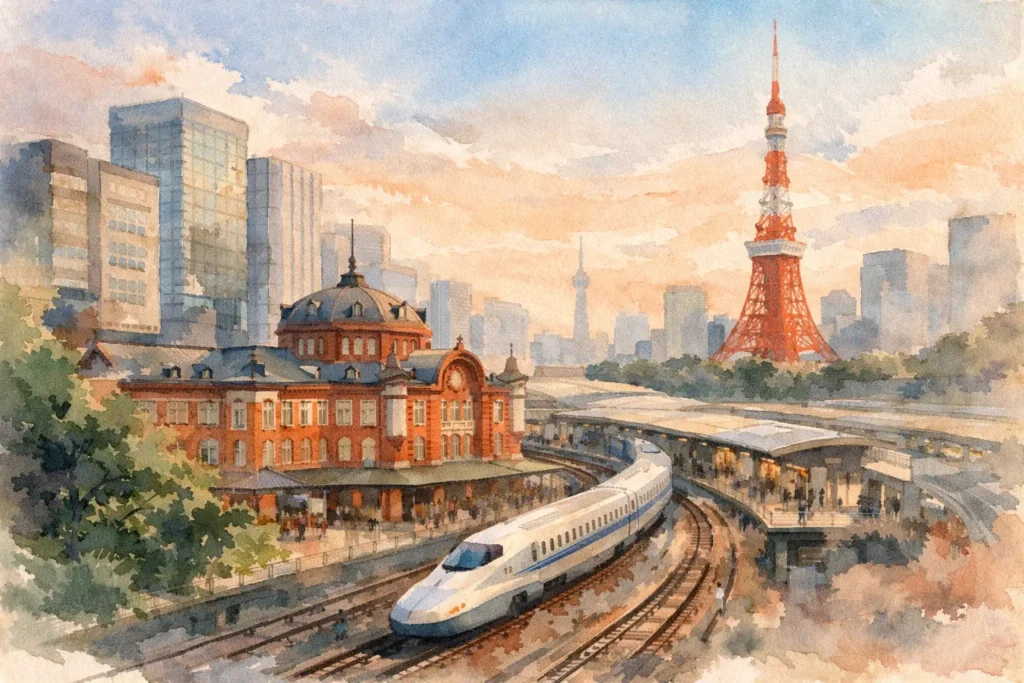
Tokyo Station combines a magnificent early-20th-century red-brick Marunouchi façade with some of Japan’s most useful rail connections. Its location makes it especially appealing for a first visit, when you may want direct access to Ginza, the Imperial Palace gardens, Nihonbashi, and the Shinkansen network.
A hotel near Tokyo Station suits travelers building day trips into their plans. Kyoto, Kanazawa, Nagoya, and other destinations are easier to reach when the bullet train is close by, while Yokohama and Kamakura are also within comfortable reach by regular rail. The surrounding Marunouchi area feels polished and spacious, with broad avenues, refined restaurants, and striking modern architecture set against the station’s historic presence.
This is not usually Tokyo’s most budget-friendly hotel zone, and it becomes quieter after business hours than Shinjuku or Shibuya. That can be a benefit if you value calm evenings, but travelers seeking spontaneous nightlife may prefer to stay elsewhere and visit Marunouchi during the day.
Ueno Station: For Museums, Old Tokyo, and Value
Ueno is one of Tokyo’s most rewarding bases for travelers drawn to art, history, and everyday neighborhood character. Ueno Park holds major museums, ponds, temples, and seasonal cherry blossoms, while nearby Ameyoko offers a lively market atmosphere of snack stalls, produce, clothing, and casual eateries. From here, Asakusa and its timeless Sensō-ji atmosphere are easy to reach.
Hotels near Ueno Station can offer better value than similarly located properties in the city’s most fashionable centers. The station also connects well toward Narita Airport and northern Japan, making it particularly practical for travelers with an early departure or a route that continues to Nikko, Sendai, or Hokkaido.
Ueno feels less glossy than Marunouchi and less theatrical than Shinjuku. That is precisely its appeal. It offers a more grounded, lived-in side of Tokyo, where museum mornings can lead naturally into noodle shops, small bars, and evening strolls through Yanaka’s quieter streets.
Shibuya Station: For Contemporary Tokyo
Shibuya is a compelling choice for travelers who want Tokyo’s contemporary creative energy at their doorstep. The famous crossing is only one part of the district. Behind the crowds are design stores, record shops, intimate coffee counters, galleries, fashion, and streets that shift quickly from dazzling commercial spectacle to residential calm.
A hotel near Shibuya Station is well placed for Harajuku, Omotesando, Daikanyama, Ebisu, and Roppongi. It works especially well for shorter stays focused on dining, shopping, nightlife, and photography. The neighborhood is dynamic from morning until late, and it has a youthful, constantly evolving character.
Choose carefully if quiet is a priority. Hotel rooms on higher floors or on streets set back from the main crossings can make a meaningful difference. Shibuya Station is also undergoing ongoing redevelopment, so maps and walking routes may not always match the experience on the ground.
Shinagawa Station: For Smooth Arrivals and Departures
Shinagawa is often overlooked, yet it is one of the smartest places to stay when logistics matter. The station is served by the Tokaido Shinkansen and offers convenient connections to Haneda Airport, Yokohama, and central Tokyo. It is a particularly strong option for a short stay, a business-oriented itinerary, or a trip that continues west toward Kyoto and Osaka.
The atmosphere is more restrained than Shinjuku or Shibuya, with many modern hotels and office towers nearby. You will not find the same density of landmark attractions directly outside the station, but you gain a calmer base and efficient transport. For some travelers, that is exactly the right balance.
How to Choose the Right Hotel, Not Just the Right Station
Start with your likely itinerary rather than a map of Tokyo alone. If your plans revolve around temples, Ueno’s museums, Akihabara, and Asakusa, staying near Ueno may save more time than booking in Shibuya simply because it is famous. If you are planning several long-distance train journeys, Tokyo Station or Shinagawa can remove unnecessary transfers.
Then consider the station exit. Tokyo stations are not small landmarks with one front door. A hotel beside the wrong side of a major station may be less convenient than one slightly farther away near the correct line. This matters most at Shinjuku, Shibuya, Ikebukuro, and Tokyo Station, where internal walking can add unexpected time.
Room size also deserves attention. Compact rooms are common in central Tokyo, and that can be a sensible trade-off for a beautiful location and excellent access. Travelers with large suitcases, children, or a longer stay may appreciate an apartment-style room, a hotel with laundry facilities, or a property a few stops beyond the busiest centers where space often improves.
Finally, think about the hour you want Tokyo to reveal itself. Near Shinjuku, the city continues long after sunset. Near Ueno, mornings can begin with park light and the quiet approach to a museum. Near Tokyo Station, the city feels architectural and composed. A well-chosen hotel is not merely a place between outings. It becomes the neighborhood that greets you each morning and gives your Tokyo journey its own distinct rhythm.