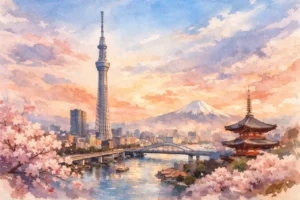

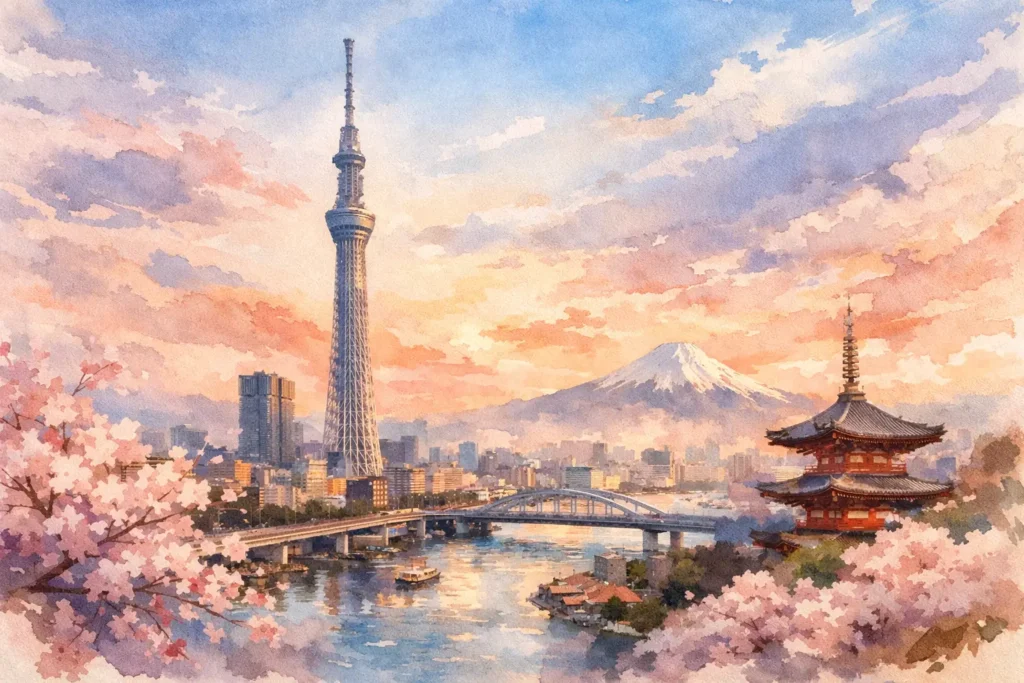
Tokyo Skytree tickets and hours shape far more than a simple sightseeing stop. At 2,080 feet, this magnificent broadcast tower rises over Sumida like a silver-blue needle, offering a view of Tokyo that makes the city’s extraordinary scale suddenly tangible: the Sumida River below, the temple roofs of Asakusa nearby, dense neighborhoods stretching toward Shinjuku, and Mount Fuji appearing on clear days.

The experience is partly about the panorama, but it is also about perspective. Tokyo Skytree stands beside the older, more intimate streets of eastern Tokyo, where traditional craft culture, Sensō-ji, and everyday neighborhood life remain close at hand. Plan the timing well, choose the observatory that suits you, and the visit can become one of the most memorable moments of a Tokyo itinerary.
Tokyo Skytree Hours: When to Go
Tokyo Skytree generally welcomes visitors from 10:00 a.m. to 10:00 p.m., with final admission usually at 9:00 p.m. Hours can change for seasonal operations, special events, maintenance, severe weather, or holiday periods, so confirm the schedule for your travel date before heading out.
The best arrival time depends on the atmosphere you want. Morning is the calmest choice, especially on weekdays. Visibility is often clearer earlier in the day, which matters if Mount Fuji is on your wish list. You will also have time afterward to explore Tokyo Solamachi, the expansive shopping and dining complex at the tower’s base, or walk toward Asakusa.
Late afternoon offers the most dramatic transition. Enter before sunset, watch daylight soften across the city, and stay as Tokyo turns into a vast field of illuminated streets and towers. This is the most coveted window, particularly on weekends and during the cherry blossom or autumn foliage seasons. It is beautiful, but it rarely feels quiet.
Night visits have a different appeal. The city becomes abstract and cinematic, with traffic threading through the darkness and the distant skyscrapers of central Tokyo shining on the horizon. Photographers should remember that reflections on the observatory glass can be challenging after dark. Wear darker clothing, keep your camera close to the window, and be patient.
Choosing Tokyo Skytree Tickets
There are two main observation levels. The Tembo Deck, at 1,148 feet, is the core experience and the right choice for most travelers. Its broad, enclosed viewing floors provide spectacular 360-degree views without making the visit feel rushed.
The Tembo Galleria climbs higher, reaching 1,480 feet. Its upward-sloping glass corridor creates the sensation of walking through the sky. Choose a combined ticket if you love architecture, want the highest possible viewpoint, or are celebrating a special trip to Tokyo. If you are traveling with young children, managing a tight schedule, or simply want the iconic skyline view, the Tembo Deck alone is still deeply rewarding.
Ticket pricing is variable and can differ by date, time, purchase channel, visitor category, and whether you select the Deck or a combined Deck-and-Galleria admission. Buying online in advance often gives you a designated entry time and can be preferable during busy periods. Same-day tickets may be available, but they can involve waits and do not always offer the time slot you want.
International visitors may encounter ticket options designed for overseas guests. These can be useful, though the best choice depends on the current pricing and your preferred arrival time. Rather than assuming one ticket type is always cheaper, compare the available options when your dates are fixed.
Is advance booking worth it?
For a weekday morning outside major holidays, advance booking is convenient rather than essential. For sunset, weekends, school vacation periods, and any day when your Tokyo schedule leaves little room for adjustment, it is strongly recommended.
A timed ticket does not mean every moment will be crowd-free. Elevators, viewing windows, and photo spots can still be busy. It does mean you are much less likely to spend a precious afternoon standing in a long ticket line while the light outside changes.
Give yourself more time than you expect
Set aside about 90 minutes for the Tembo Deck, including entry, elevator rides, viewing time, and photos. Add roughly 30 to 45 minutes for the Tembo Galleria. A sunset visit may deserve two hours or more because the changing light is the point.
Arrive a little before the time printed on your ticket. Security screening, elevator queues, and the sheer temptation to pause at every window can take longer than expected. If you have a restaurant reservation or a booked activity afterward, avoid scheduling it too tightly.
What the View Reveals About Tokyo
From the Tembo Deck, Tokyo is not just a skyline. It is a living map of the capital’s contrasts. Look west to trace the dense urban core and the clusters of high-rises in the distance. Look down toward the Sumida River, once a vital corridor of commerce and culture in Edo, the former name of Tokyo. Nearby Asakusa carries the atmosphere of an older city, while Skytree’s futuristic silhouette represents the contemporary metropolis that grew around it.
On clear days, Mount Fuji appears far to the west or southwest, a quiet and timeless counterpoint to the city. Do not be discouraged if clouds hide it. Tokyo’s weather changes quickly, and the view remains captivating even when the horizon is hazy. Rain can also create a moody, reflective cityscape, while winter often brings the sharpest visibility.
The tower itself is an architectural statement. Its design incorporates a graceful taper inspired by traditional Japanese forms, including the subtle curves associated with temple pillars and the upward sweep of classical craftsmanship. At its heart is a central column system that draws inspiration from the structural logic of the five-story pagoda, a historic form known for its resilience during earthquakes. It is a fascinating example of Japan allowing heritage and advanced engineering to exist in conversation rather than opposition.
Making a Day Around Tokyo Skytree
Tokyo Skytree is easiest to enjoy as part of an eastern Tokyo day rather than an isolated attraction. Begin in Asakusa, where Sensō-ji’s vivid vermilion gates, incense-filled approach, and surrounding lanes offer a timeless introduction to Tokyo. From there, Skytree is close enough to remain visually present, creating a striking contrast between temple roofs and the tower above them.
Tokyo Solamachi below Skytree is useful for more than a quick meal. Its many shops bring together Japanese sweets, regional specialties, design goods, character culture, and casual dining. It can be a practical pause in summer heat or rain, but it is also a lively snapshot of contemporary Tokyo life. For a quieter moment outdoors, walk along the Sumida River or cross toward the streets between Oshiage and Asakusa.
If you are visiting with children, the area can comfortably fill much of a day, especially with the aquarium and family-oriented attractions within the complex. If you prefer a culture-focused itinerary, pair Skytree with Asakusa and allow the observatory to be your evening finale.
Practical Details Before You Go
Tokyo Skytree is directly connected to Oshiage Station, served by several rail lines, making it straightforward to reach from central Tokyo and nearby Asakusa. The entrance procedures and observatory routes are clearly organized, but the complex is large, so leave a few extra minutes to find the correct ticket counter or entrance.
Large luggage is inconvenient at the observatory. Travel light where possible, and use station or facility lockers if available. Food and drinks may be restricted in observation areas, while photography is generally part of the experience. Follow posted rules, particularly around tripods, drones, and any equipment that could obstruct other guests.
Weather deserves one final thought. A blue-sky forecast does not guarantee a clear distant horizon, and a cloudy day does not erase the pleasure of seeing Tokyo’s neighborhoods unfold below. If a view of Mount Fuji is your priority, choose a crisp winter morning or keep your schedule flexible. If your priority is the feeling of Tokyo at its most vibrant, sunset and night bring their own unforgettable rewards.
Save the visit for a moment when you can slow down. Above the traffic and train lines, Tokyo Skytree offers a rare pause to see how temple districts, riverbanks, compact homes, neon corridors, and futuristic towers all belong to one endlessly fascinating city.