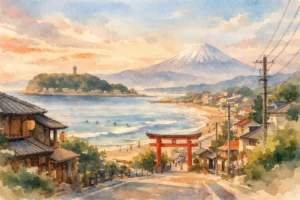

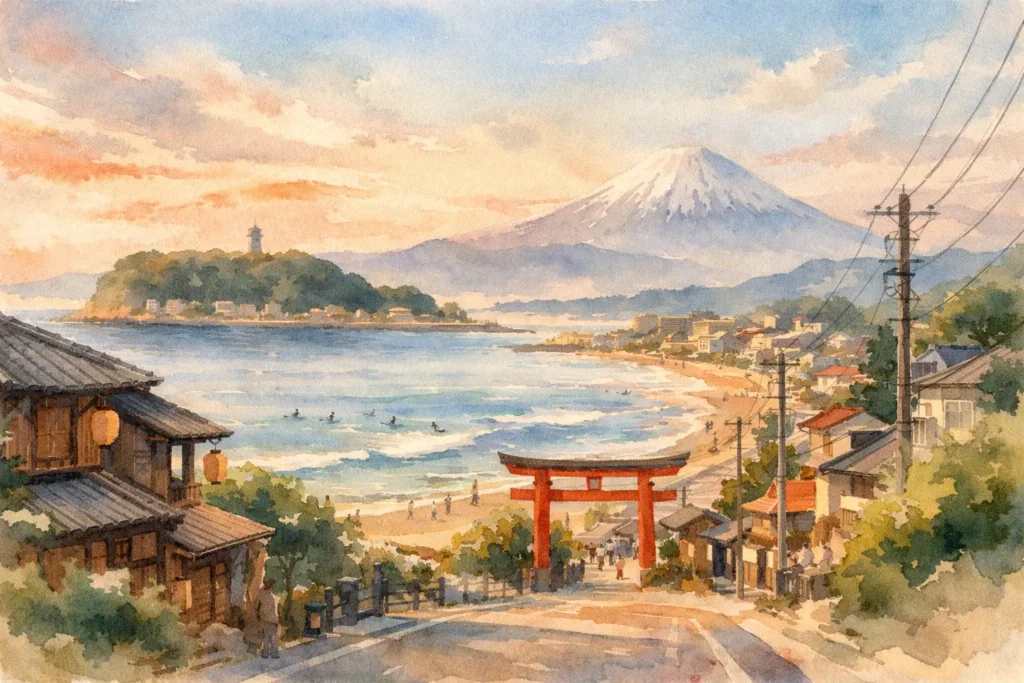
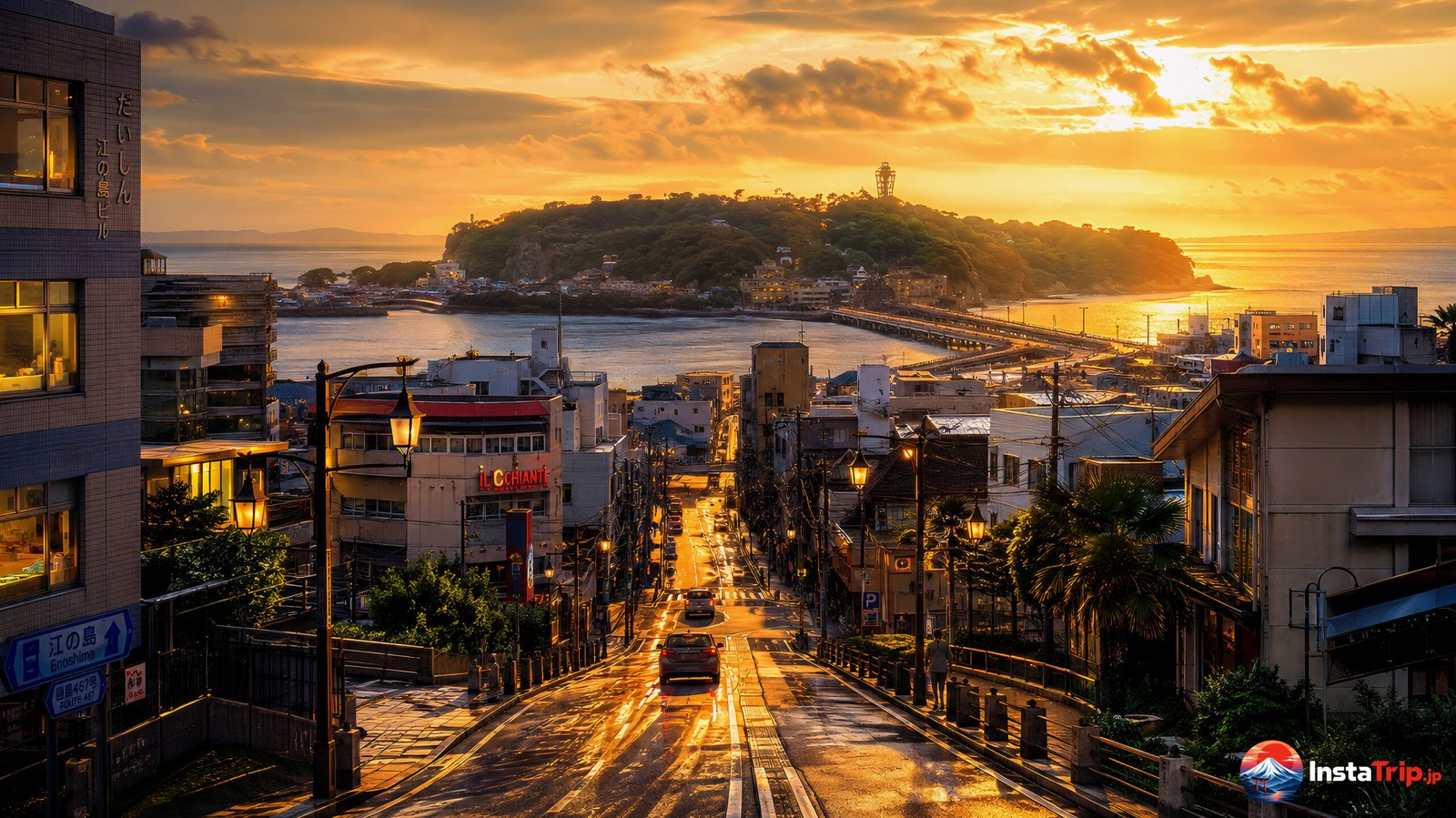
The first glimpse of Enoshima rising beyond the water explains why Fujisawa City has such a lasting pull. Here, the hum of commuter trains meets the salt air of Shonan, surfers watch the morning waves, and old pilgrimage routes lead toward temple gates. Less than an hour from central Tokyo by train, Fujisawa offers a captivating version of coastal Japan that feels lived-in rather than staged.

Its appeal lies in the contrasts. Enoshima is a celebrated island of shrines, sea caves, observatories, and dazzling evening views, while central Fujisawa carries the quieter rhythm of a regional city shaped by centuries of travel and trade. Kamakura may draw more first-time visitors, but Fujisawa rewards those who slow down and look beyond the headline attractions.
What Makes Fujisawa City Different
Fujisawa sits in Kanagawa Prefecture on the Sagami Bay coast, west of Yokohama and south of Tokyo. The city includes Enoshima and the beach neighborhoods around Katase, but it also stretches inland through residential districts, shopping streets, and historic sites. That geography matters: Fujisawa is not simply a beach stop. It is a place where an island pilgrimage, an afternoon by the ocean, and an ordinary local dinner can belong to the same day.
The coast is part of the broader Shonan area, a name that evokes sunlight, surf culture, cycling paths, and a more relaxed pace than nearby Tokyo. On clear days, the views can be magnificent, with Enoshima framed by the broad bay and Mount Fuji appearing in the distance. Yet Shonan is not a permanent postcard. Cloudy skies, wind, and seasonal crowds can change the atmosphere completely, which is part of its honest charm.
Fujisawa also has a strong rail identity. Fujisawa Station is a useful hub, while the small, nostalgic Enoden railway links the city with Enoshima, Kamakura, and coastal scenes that have become icons of Kanagawa. The ride is short, but it is more than transportation. Trains pass close to homes, cross local streets, and reveal the intimate scale of this densely woven seaside region.
From Tokaido Travelers to Shonan Days
Long before beach culture defined the area, Fujisawa was known as Fujisawa-shuku, the sixth post town on the Tokaido, the great Edo-period road connecting Edo, now Tokyo, with Kyoto. Travelers stopped here to rest, eat, find lodging, and prepare for the route toward Enoshima. The city’s role as a threshold between the capital, the coast, and sacred destinations has never entirely disappeared.
One of the most meaningful places to encounter this history is Yugyo-ji, formally known as Seishoji Temple. Its spacious grounds and dignified main hall offer a marked change of pace from the energy around the station and shore. The temple became an important center of the Ji-shu Buddhist tradition, and its presence recalls the era when religious travel and long-distance movement shaped Fujisawa’s streets.
This historical layer gives the city depth. A visitor can easily spend a morning amid modern cafes and rail platforms, then walk into a temple precinct connected to medieval and Edo-period spiritual life. Fujisawa does not force its past into a museum-like experience. It remains part of the city’s everyday landscape.
Enoshima’s Sacred Landscape
Enoshima is Fujisawa’s most recognizable destination, connected to the mainland by a bridge and approached through a busy street of shops and restaurants. It can feel lively, particularly on weekends, but its deeper character emerges as you climb through the island’s shrines, gardens, rocky pathways, and viewpoints.
The island has been associated for centuries with Benzaiten, the deity linked with music, eloquence, the arts, and good fortune. Enoshima Shrine is spread across several sections of the island, encouraging visitors to move upward through a landscape where worship, commerce, and natural beauty coexist. This is not an isolated monument. It is a sacred place woven into a popular excursion destination, reflecting a distinctly Japanese way in which spiritual sites can remain active within daily public life.
Allow time for the ascent. Escalators are available in parts of the route for a fee, but walking reveals more of Enoshima’s changing texture: vermilion gates, stone lanterns, narrow passages, sea breezes, and sudden views across the bay. At the far end, the Iwaya caves bring visitors close to the island’s rocky edge. They are atmospheric, though weather and sea conditions can affect access, so flexibility is wise.
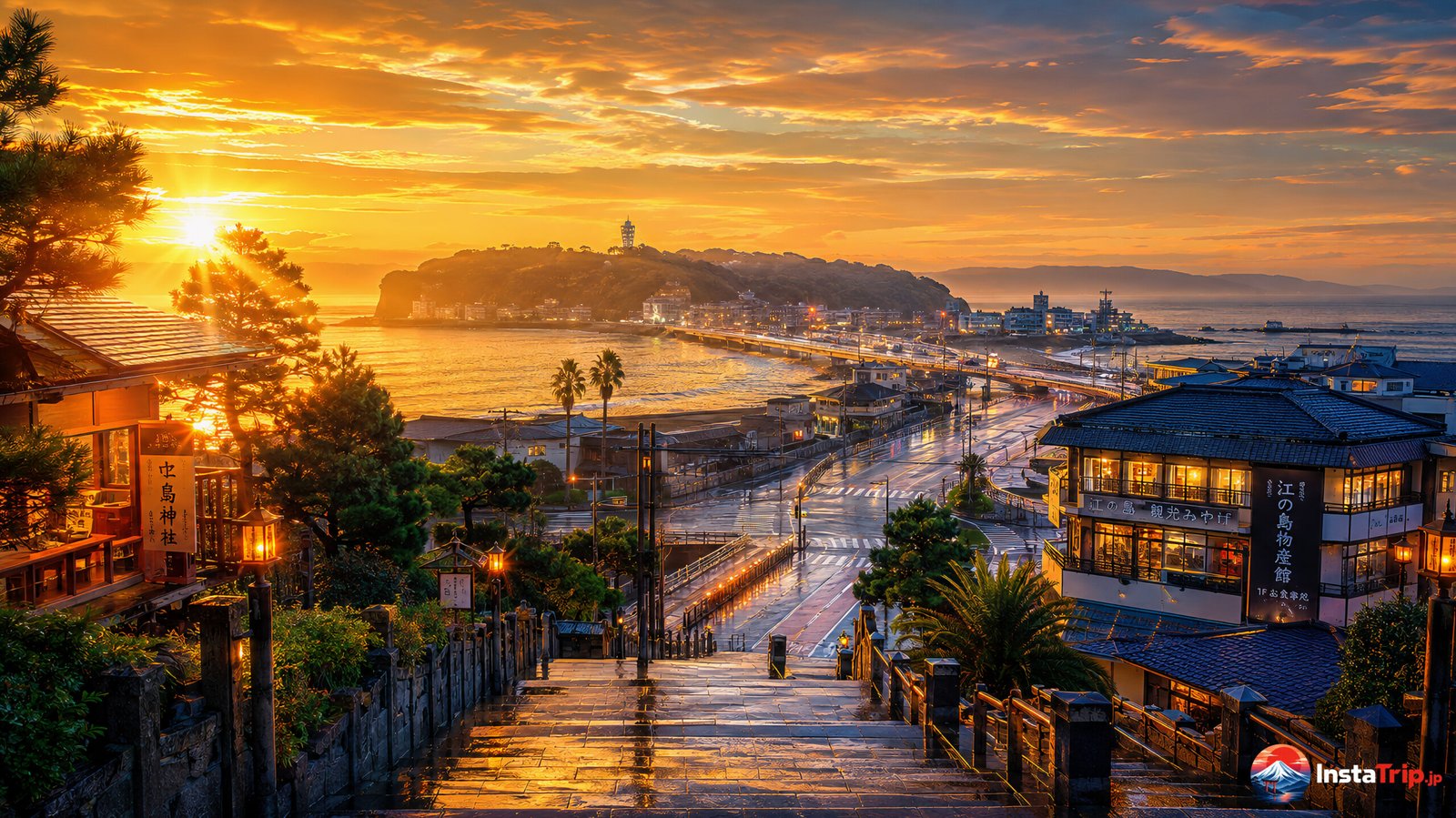
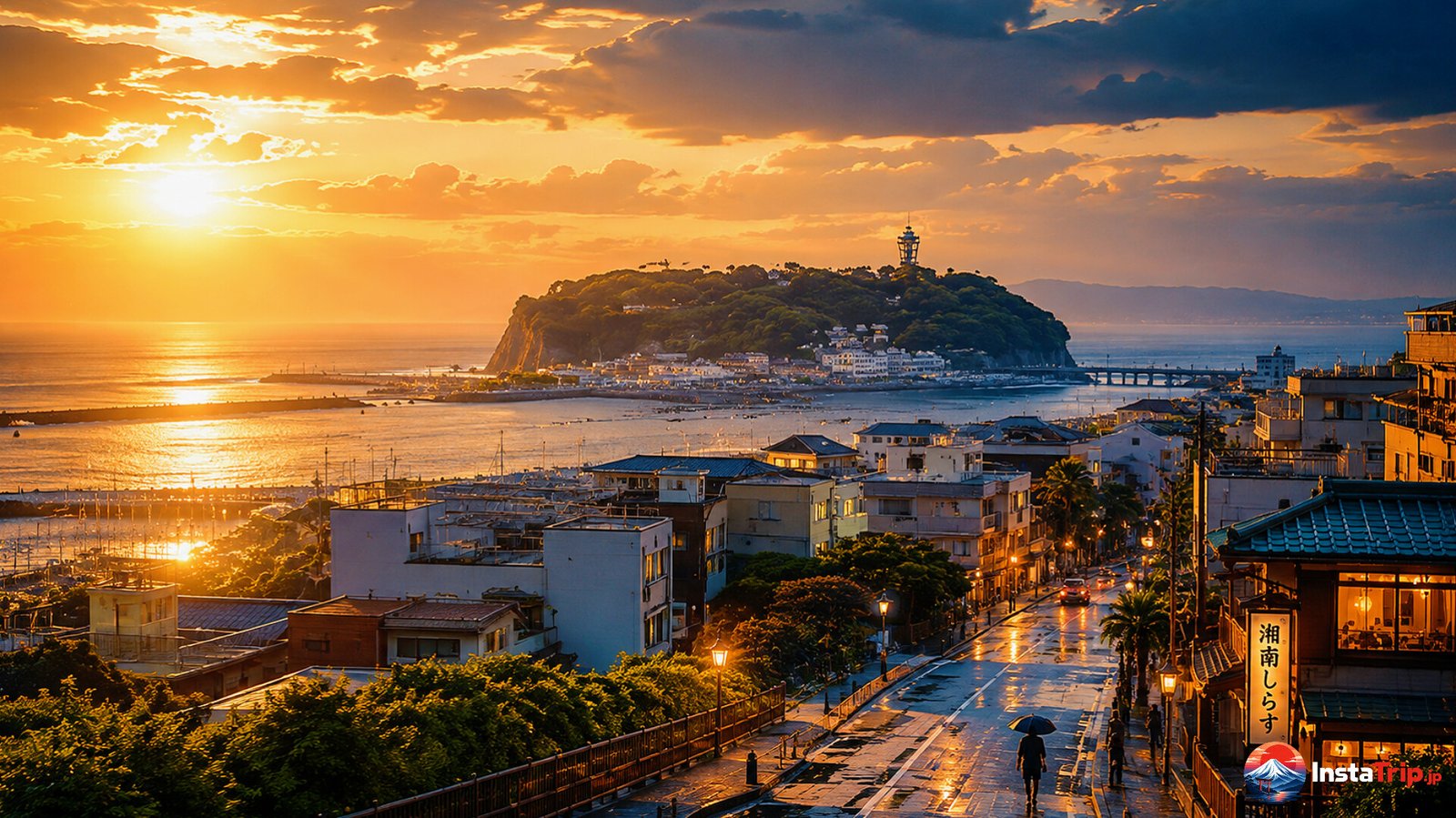
Toward sunset, the Samuel Cocking Garden and Enoshima Sea Candle offer one of the area’s most memorable perspectives. The tower’s modern silhouette contrasts beautifully with the island’s older shrine landscape. In winter, seasonal illuminations add another layer of color, but the clearest, quieter views often come on an ordinary weekday afternoon.
Experiencing Fujisawa City Beyond the Island
Katase Higashihama and Katase Nishihama beaches sit near the base of Enoshima, providing Fujisawa’s classic coastal scene. Summer brings beach houses, swimmers, and high-energy crowds. Outside the peak season, the shore is often better suited to walking, photography, or simply watching local surfers work with changing waves.
This difference is worth understanding before planning. Travelers seeking a vibrant beach atmosphere should come in summer, while those drawn to light, open horizons, and a more contemplative coast may prefer spring, autumn, or a crisp winter day. The ocean is always present, but the experience is not the same in every month.
Near Katase, Ryuko-ji Temple offers another compelling stop for visitors interested in Buddhist history. The temple is associated with Nichiren, one of Japan’s influential Buddhist teachers, and its multi-storied pagoda creates a striking architectural counterpoint to the surrounding urban neighborhood. Visiting respectfully means treating it as a place of worship first: keep voices low, observe posted guidance, and avoid blocking worshippers for photographs.
Food in Fujisawa is closely tied to the bay. Shirasu, tiny white fish often served over rice, is a local specialty that appears in many restaurants around Enoshima and Katase. Fresh raw shirasu is especially sought after, but availability depends on the catch, season, and fishing conditions. A cooked shirasu dish can be just as satisfying, and it avoids turning a local food tradition into a checklist item.
For a less obvious side of the city, return to the area around Fujisawa Station. Department stores, casual restaurants, neighborhood bars, and small eateries reveal the everyday Fujisawa that many visitors miss while rushing toward Enoshima. This is where the destination feels most complete: not only a scenic coast, but a functioning city where people commute, meet friends, shop for dinner, and head home beneath the same skies visitors photograph.
A Thoughtful Way to Plan a Fujisawa Day
Fujisawa works beautifully as a day trip from Tokyo, Yokohama, or Kamakura, but it deserves more than a rushed island loop. Starting early is especially useful on weekends, when Enoshima’s approach and popular viewpoints become busy. Begin at Enoshima or Katase-Enoshima Station, explore the island before midday, then choose between a beach walk, Ryuko-ji, or the Enoden route toward Kamakura.
If history matters more than the coast, begin at Fujisawa Station and visit Yugyo-ji before heading south. This order makes the city’s older identity visible before the island’s visual drama takes over. Travelers with a full extra day can combine Fujisawa’s shore with Kamakura, but trying to see every major sight in both places may leave little room for the slower moments that make this region memorable.
Comfortable walking shoes are essential, especially for Enoshima’s slopes and uneven coastal paths. Bring layers even in warmer months, since the bay breeze can be cooler than expected. Above all, check the weather before committing to a Mount Fuji view or a sea-cave visit. Fujisawa is generous, but it asks visitors to meet it on its own changing terms.
Stay long enough to watch the light shift over the water, then follow the trains back through the city. In that transition from island glow to ordinary platform life, Fujisawa reveals its most enduring appeal: a vibrant coastal escape with centuries of movement, faith, and daily life still flowing through it.