
Tokyo can feel gloriously dense, but Odaiba changes the rhythm. Set across reclaimed land on Tokyo Bay, this dynamic waterfront district opens onto vast skies, sea breezes, gleaming towers, and the magnificent silhouette of Rainbow Bridge. The best things to do in Odaiba combine futuristic Tokyo spectacle with slower pleasures: watching ferries cross the bay, discovering hands-on science, lingering over a sunset, and seeing how Japan continues to imagine the city of tomorrow.

Odaiba’s name carries a surprising historical echo. It comes from daiba, the defensive batteries built in the bay during the 1850s, when Japan faced growing pressure from foreign ships. Much of today’s district was developed much later, transforming the waterfront into a bold landscape of museums, entertainment, shopping, offices, and public promenades. That contrast between history and invention is part of what makes Odaiba feel so distinctly Tokyo.
Things to Do in Odaiba for a Full Day by the Bay
1. Walk Odaiba Seaside Park beneath Rainbow Bridge
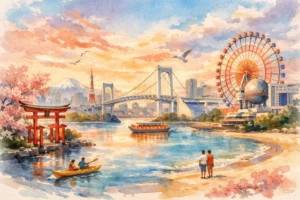
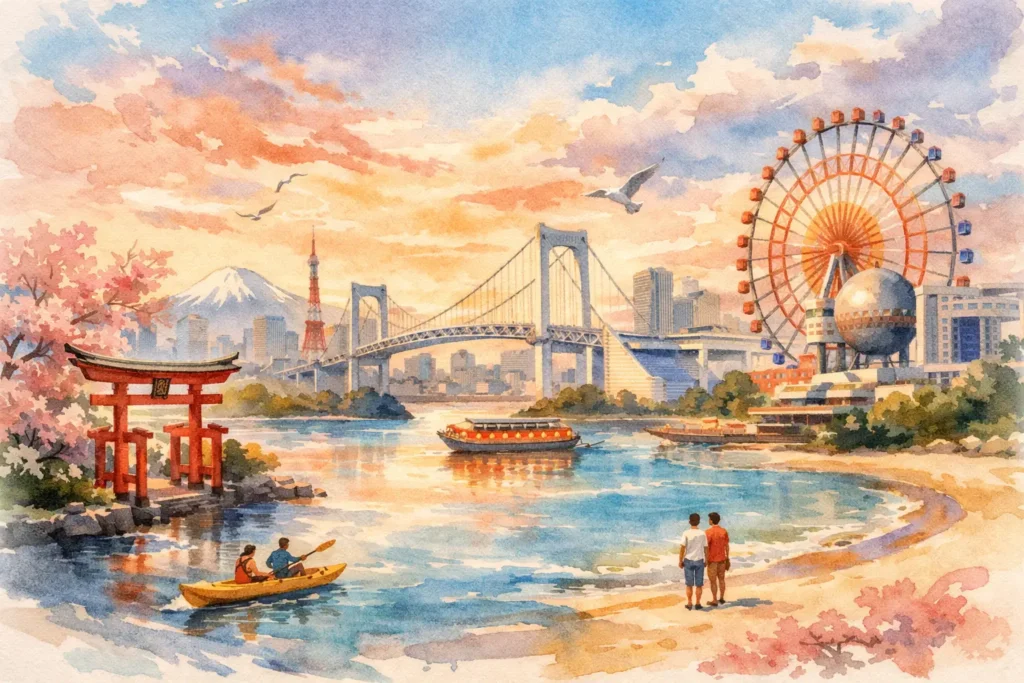
Begin at Odaiba Seaside Park, where a sandy shore and wide waterfront path create one of Tokyo’s most cinematic urban views. Rainbow Bridge spans the bay in front of you, while central Tokyo rises beyond it in a layered skyline. The beach is not a typical swimming destination, but it is ideal for an unhurried walk, photographs, or a quiet pause with a drink from a nearby convenience store.
Come toward late afternoon if you can. The light softens across the water, boats leave bright trails below the bridge, and the city begins its transformation into an evening panorama. It is a rare place in Tokyo where space, rather than crowds, defines the experience.
2. See the Statue of Liberty with a Tokyo backdrop
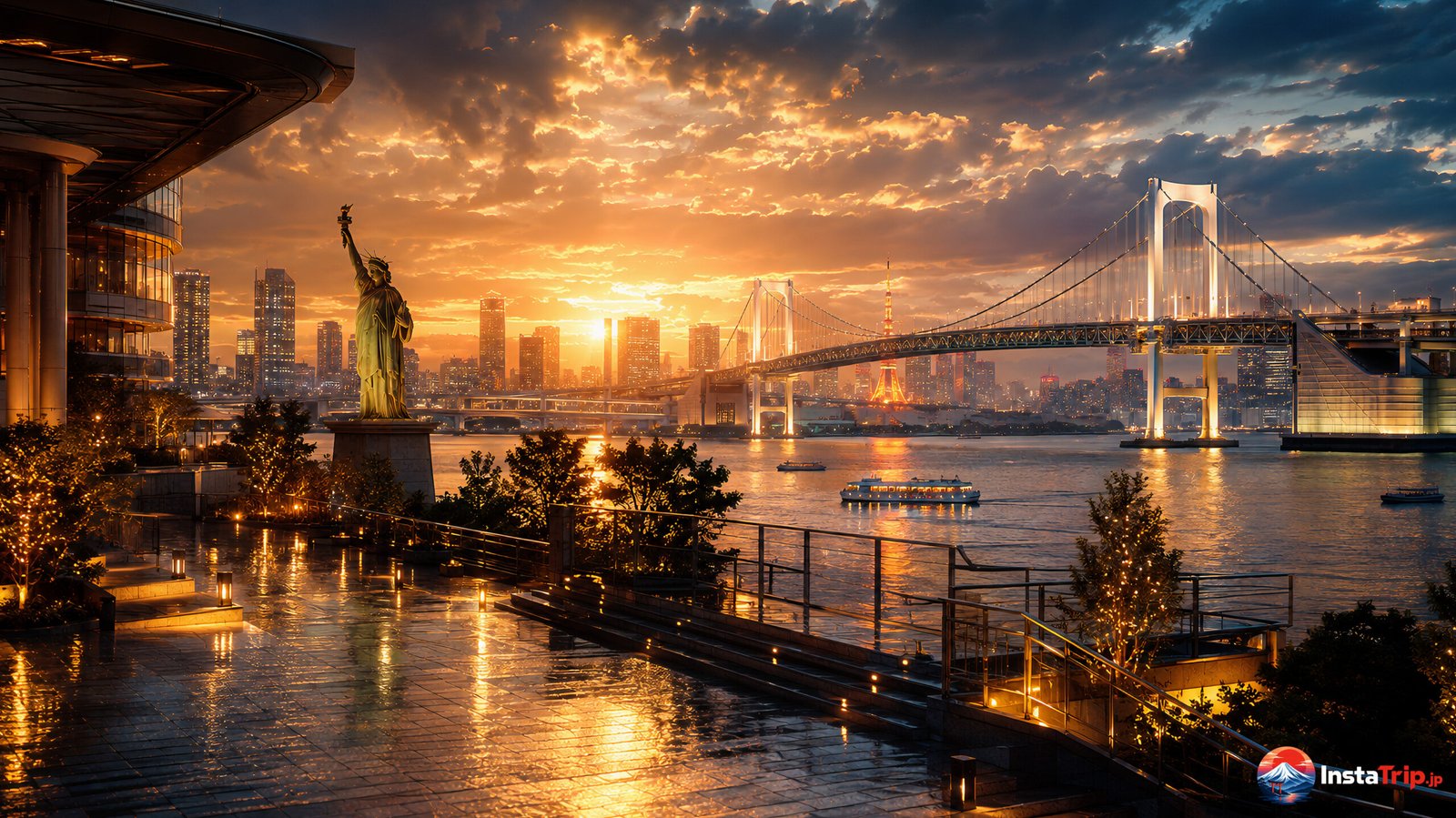
Near the waterfront, Odaiba’s smaller Statue of Liberty offers one of the district’s most playful visual surprises. It was originally installed as part of a French-Japanese cultural exchange and later became a permanent landmark. Framed with Rainbow Bridge and Tokyo Tower in the distance, it is less about replicating New York than creating an unmistakably international Tokyo scene.
This is a brief stop, not a destination that needs an hour. Pair it with the seaside park or the nearby malls, especially at dusk when the bridge’s illumination heightens the view.
3. Meet the Unicorn Gundam at DiverCity Tokyo Plaza
Outside DiverCity Tokyo Plaza stands the life-size Unicorn Gundam statue, an arresting symbol of Japan’s enduring influence on global anime and science-fiction design. Towering above the plaza, it shifts between Unicorn and Destroy modes during scheduled transformations and lighting presentations. Even visitors unfamiliar with the Gundam universe can appreciate its formidable scale and intricate mechanical detail.
Inside, The Gundam Base Tokyo deepens the experience with model displays, kits, and a look at the craftsmanship behind Gunpla, plastic models that have become a beloved creative hobby in Japan and abroad. Check the day’s program on arrival, as show times and special displays can change.
4. Get curious at Miraikan
The National Museum of Emerging Science and Innovation, widely known as Miraikan, is one of Odaiba’s most rewarding stops for travelers who want more than a photo opportunity. Its exhibitions consider space exploration, robotics, environmental systems, medicine, artificial intelligence, and the complicated relationship between people and technology.
The museum’s giant globe display, Geo-Cosmos, is especially memorable, presenting Earth as a vivid, changing sphere suspended within the building. Miraikan is excellent for families, but it is not only for children. Adults who enjoy design, research, and big questions about the future may find it the most thought-provoking part of their Odaiba visit. Allow at least two hours, and more if a temporary exhibition catches your interest.
5. Ride and play at Tokyo Joypolis
Tokyo Joypolis at DECKS Tokyo Beach is an indoor amusement center built around arcade culture, digital attractions, motion rides, and Japanese game-world energy. It is a lively choice on a rainy day or when summer heat makes outdoor sightseeing less appealing.
The appeal depends on your travel style. Serious thrill-seekers may find the rides more compact than a full-scale theme park, while fans of Sega’s legacy, interactive entertainment, and colorful sensory spectacle will enjoy the atmosphere. Go in the evening if you want Odaiba’s neon-lit, high-energy side.
6. Lose track of scale at Small Worlds Miniature Museum
Just beyond Odaiba in nearby Ariake, Small Worlds Miniature Museum is easy to combine with a waterfront itinerary and well worth the short trip. Detailed miniature worlds recreate places and stories on an astonishingly small scale, from space-age scenes to imagined cities and anime-inspired settings. Look closely and you will notice tiny commuters, shopfronts, moving vehicles, and miniature dramas unfolding behind windows.
It is a fascinating expression of monozukuri, Japan’s culture of attentive making. The pleasure is not simply recognizing a famous fictional world. It is seeing the patience, precision, and narrative imagination invested in every centimeter.
7. Browse Aqua City and DECKS for Tokyo Bay views
Odaiba’s shopping centers are more than a practical place to eat. Aqua City Odaiba and DECKS Tokyo Beach are designed around the waterfront, with terraces, restaurants, entertainment, and viewpoints that make a meal part of the scenery. You can find everything from casual Japanese dishes to international options, often with broad views across the bay.
For a more local-feeling food break, look for regional Japanese specialties rather than defaulting to the first familiar chain. That said, the trade-off is clear: Odaiba’s dining is convenient and scenic, but it is generally more commercial than a small neighborhood restaurant in older parts of Tokyo. Choose it for the setting, especially after sunset.
8. Photograph Fuji TV’s extraordinary architecture
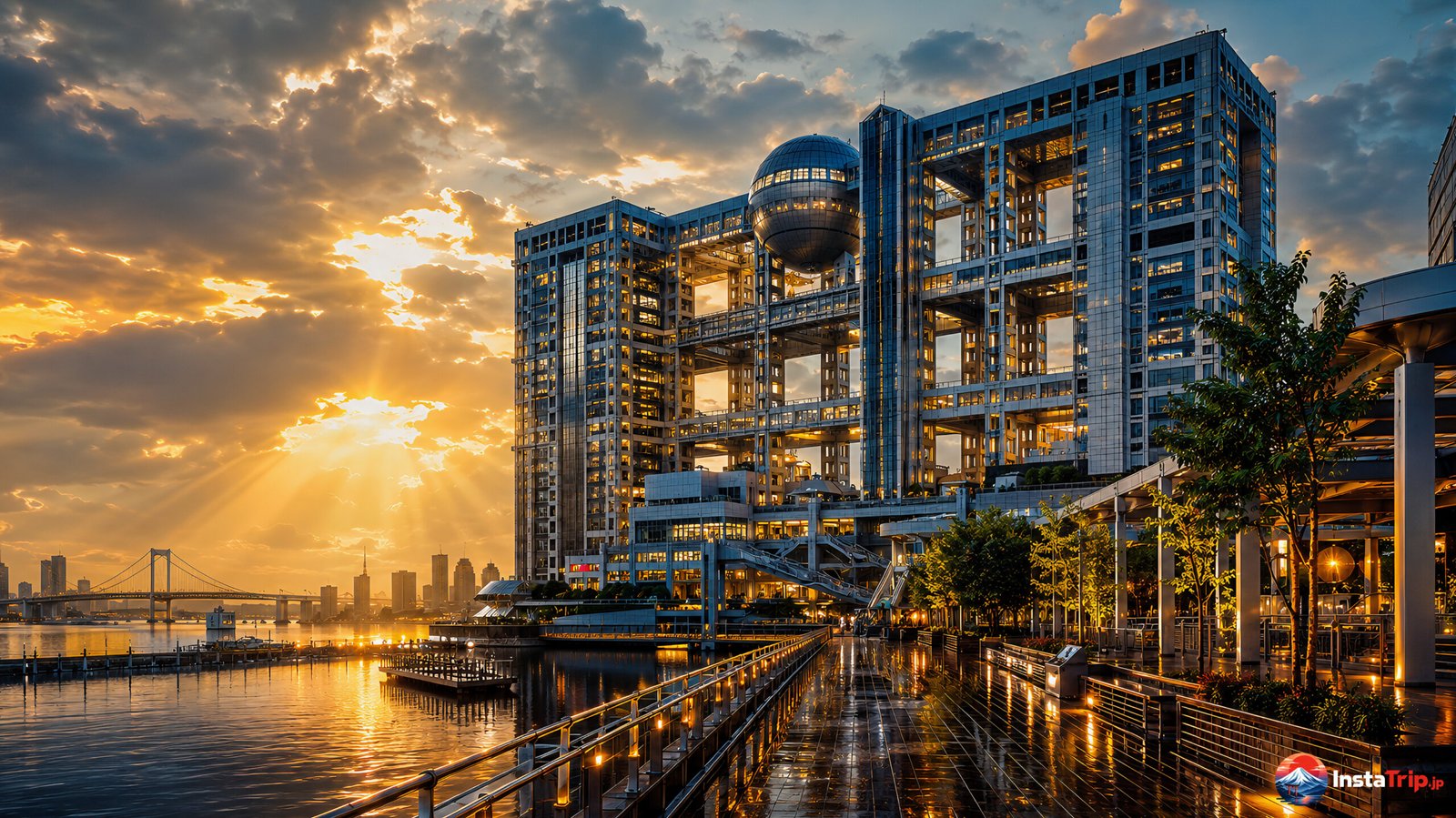
The Fuji Television Building is one of Odaiba’s defining architectural statements. Designed by Kenzo Tange, its bold geometric frame and enormous spherical observation structure feel like a vision of the future from the late 20th century – which is precisely part of its charm. The building reflects an era when Tokyo’s waterfront was imagined as a new civic frontier of media, commerce, and public life.
Fans of Japanese television may enjoy the themed displays and shops inside. For architecture lovers, simply viewing the exterior from different angles is worthwhile. Its clean, monumental form becomes especially dramatic against a blue sky or after dark.
9. Take a waterbus or cruise across Tokyo Bay
Approaching Odaiba by water changes the entire experience. Depending on seasonal operations and schedules, waterbus routes and sightseeing cruises connect the bay with areas such as Asakusa, Hinode, and Toyosu. From the deck, Tokyo reveals its infrastructure as scenery: bridges, elevated roads, warehouses, towers, and the open mouth of the Sumida River.
This is best for travelers with flexible timing. Water routes are slower than trains and can be affected by weather, but they offer a perspective no subway ride can match. If you arrive by rail, consider leaving by boat, or the other way around.
10. Watch the city ignite after sunset
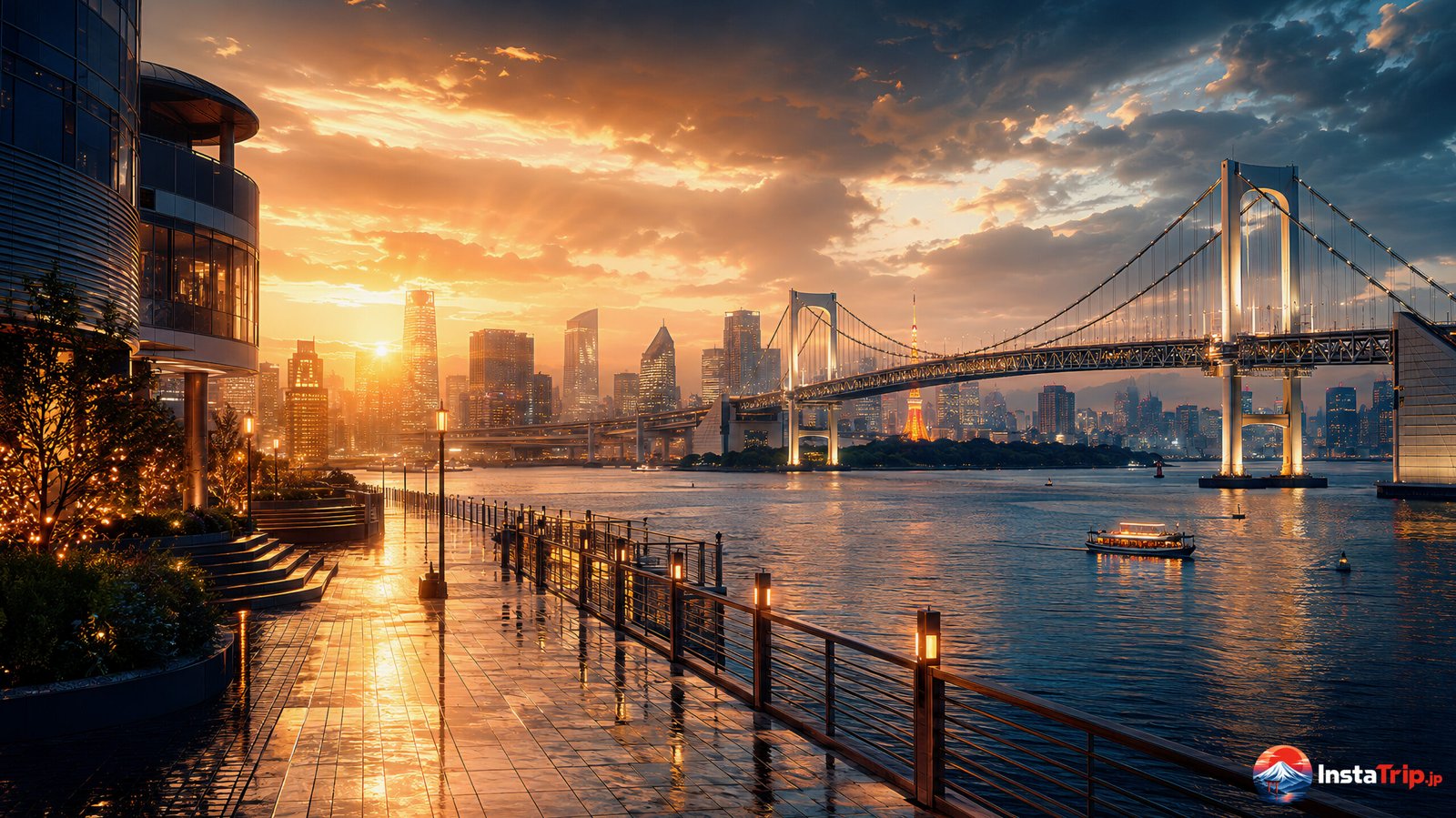
Odaiba is one of Tokyo’s finest evening districts because its visual drama has room to breathe. Rainbow Bridge glows across the dark water, office towers shimmer in the distance, and reflections from the promenades stretch across the bay. A walk from the Statue of Liberty area toward DiverCity or DECKS turns into a sequence of changing views.
For photographers, bring a tripod only if you are comfortable carrying it all day and can use it without blocking public paths. For everyone else, a phone camera and a little patience are enough. Blue hour, just after sunset, is often the most captivating moment.
11. Cross Rainbow Bridge on foot when conditions allow
Rainbow Bridge is not only something to admire from below. Its pedestrian walkway offers a memorable crossing between Odaiba and the Shibaura side of the city, with designated routes and hours that should be confirmed before you go. The walk is long enough to feel purposeful but manageable for most visitors, and the elevated bay views are exceptional.
It is not the best choice during heavy rain, strong winds, or a tightly scheduled day. But on a clear afternoon, it gives Odaiba a sense of physical connection to Tokyo’s older urban core, rather than leaving it as a futuristic island on the horizon.
12. Let Odaiba be different from old Tokyo
Odaiba does not offer the temple lanes of Asakusa or the intimate alleys of Shinjuku, and that is not a flaw. Its appeal lies in scale, experimentation, public space, and the visual excitement of a city facing the sea. Do not arrive expecting a preserved historic neighborhood. Arrive ready for a district where animation, architecture, science, shopping, and waterfront leisure meet in a distinctly contemporary Japanese setting.
Some former landmarks, including Palette Town and its Ferris wheel, have closed as the area continues to evolve. That ongoing change is part of Odaiba’s character. Leave time to wander after your planned stops, follow the lights toward the water, and let Tokyo Bay show you a version of the city that feels both immediate and still in motion.