
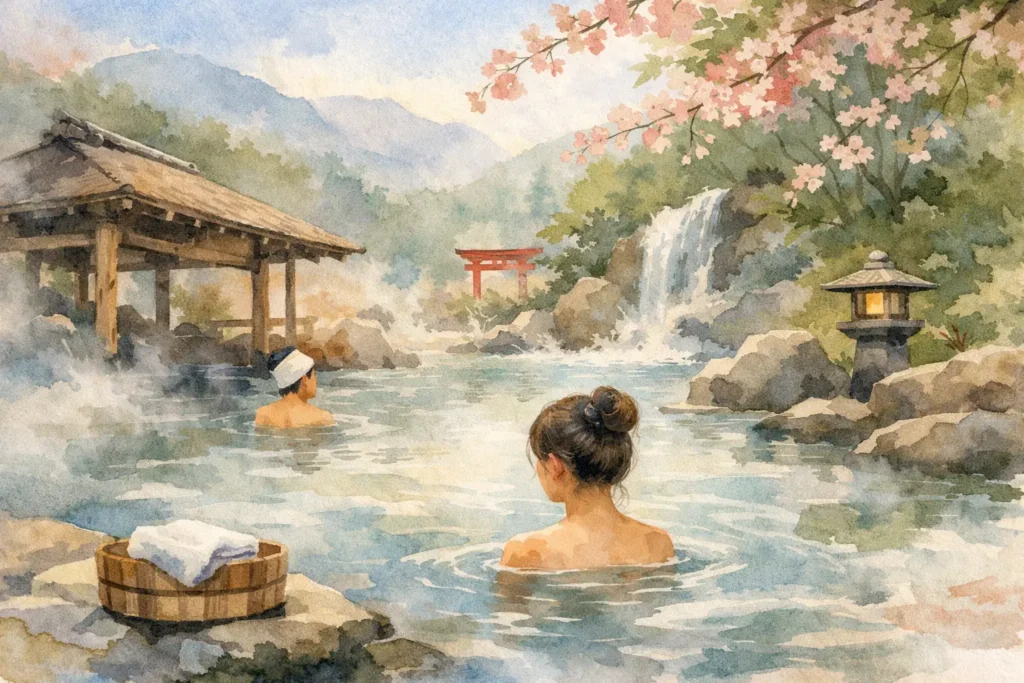
Steam curls above the water, cedar walls glow softly, and the pace of the outside world suddenly feels far away. For many travelers, an onsen is one of Japan’s most memorable experiences – but Japanese onsen etiquette for beginners can feel intimidating before that first visit. The reassuring truth is simple: follow the room, move quietly, and arrive with a clean body and an open mind.

An onsen is more than a hot bath. Its mineral-rich water comes from a natural hot spring, and the experience is shaped by a long tradition of rest, health, and communal bathing. Whether you visit a dramatic mountainside bath in Hakone, a historic bathhouse in Kusatsu, or a refined ryokan in Kyoto, the basic customs help protect the cleanliness, calm, and shared comfort of everyone in the water.
Why the Onsen Ritual Matters
The order of an onsen visit may seem precise: undress, wash, soak, rinse, and relax. Yet these gestures are not meant to make visitors nervous. They create a space where strangers can enjoy the same restorative water without fuss or spectacle.
The bath is for soaking, not washing. This distinction is at the heart of onsen culture. By cleaning thoroughly before entering, every guest helps keep the water pleasant for the next person. The atmosphere is often quiet, though not necessarily silent. A low conversation between friends is usually fine; splashing, swimming, and loud voices are not.
Onsens can be deeply social, especially for families and friends, but they also offer a rare kind of privacy. Without phones, street shoes, schedules, or formal clothes, the experience becomes remarkably direct. You do not need to perform expertise. You simply need to be considerate.
Japanese Onsen Etiquette for Beginners: Before You Enter
Start by checking the facility’s rules. Most onsens have separate bathing areas for men and women, often marked by curtains called noren. The colors can vary, so do not rely only on blue or red. Look for the Japanese characters: 男 for men and 女 for women. If you are uncertain, ask the front desk before passing through the curtain.
At the entrance, remove your shoes and place them in the provided locker or shoe shelf. Inside the changing room, you will usually find a basket or locker for your clothes and larger towel. Bring only a small washcloth or hand towel into the bathing area. Many facilities rent or sell towels, shampoo, conditioner, and body wash, while some traditional local bathhouses expect you to bring your own. A ryokan may provide everything in your room.
Bathing is normally nude. Swimsuits are not worn in conventional onsens because they are considered less hygienic and would change the shared bathing custom. This can feel unfamiliar for first-time visitors, particularly Americans accustomed to bathing suits at pools and spas. In practice, most people are focused on their own routine. Carry the small towel modestly while walking if that helps, then leave it outside the bath or balance it on your head once you enter the water. Never let it touch the bathwater.
If you have long hair, tie it up before soaking. Hair, like towels, should stay out of the water. Remove makeup if possible, and skip the onsen if you have an open wound, contagious condition, or feel unwell. Avoid bathing after heavy drinking, too: hot water and alcohol are an unwise combination.
What About Tattoos?
Tattoo policies differ widely. Historically, tattoos were associated with organized crime in Japan, and some facilities still restrict them. That does not mean every tattooed visitor will be turned away. Many modern hotels, private baths, and international-friendly onsens welcome tattooed guests, while others allow small tattoos if they are covered with a patch.
The practical answer is to check the policy before you go, especially at municipal bathhouses, resorts, and traditional ryokan. Do not assume a cover-up patch will be accepted everywhere. If public bathing is not available, a private reservable bath, called kashikiri-buro, can be a wonderful alternative for couples, families, or anyone seeking more privacy.
The Washing Area: Your Essential First Step
Beyond the changing room, you will usually find a row of low stools, faucets, mirrors, buckets, and shower heads. This is where you wash completely before entering the bath. Sit on a stool rather than standing under the shower. It keeps water from spraying neighboring guests and reflects the low-key, shared nature of the space.
Rinse your body first, then use soap and shampoo as needed. Take care to rinse away every trace of suds. Keep your belongings neatly at your station, and do not leave soap, hair, or water scattered around when you move on. If you use a bucket, rinse it after use and return it where it belongs.
Some visitors worry they must scrub themselves with unusual intensity. You do not. The goal is simply to be genuinely clean before soaking. Think of the washing area as the threshold between daily life and the bath itself.
How to Soak Without Breaking the Spell
Before entering the main bath, rinse yourself with a small scoop of water from the bath or use the nearby shower. This is called kakeyu. It helps your body adjust to the temperature, which may be hotter than a typical American hot tub.
Lower yourself in slowly. Do not jump in, splash, or swim. Many onsens range from comfortably warm to very hot, and mineral content can vary considerably. If the water feels intense, soak for a few minutes, step out to cool down, drink water, and return later if you wish. Pushing through discomfort is not a badge of honor.
Keep the water below your shoulders if it is especially hot, and avoid putting your face underwater. The bath is a place to rest, not a place to exercise. You may see guests sitting quietly with a folded towel on their heads, gazing into a garden, or simply closing their eyes. Let yourself do the same.
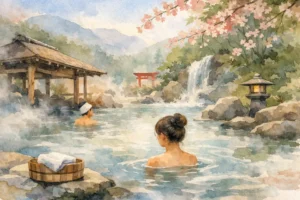
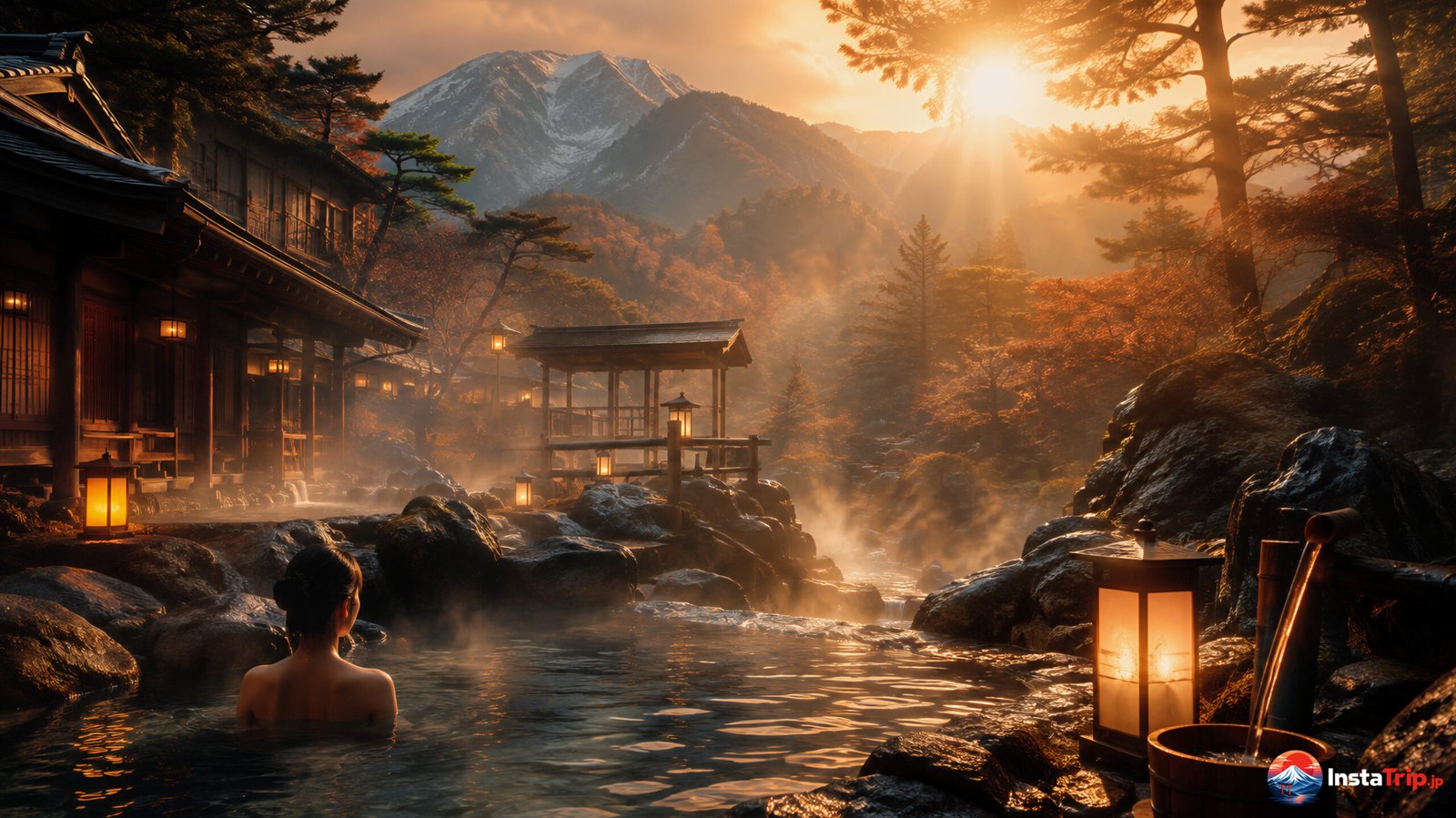
Outdoor baths, known as rotenburo, make the ritual even more captivating. In winter, you might soak while snow settles on dark pines; in warmer months, you may hear insects, wind, or a river beyond the stones. The setting changes, but the etiquette does not. Speak softly, preserve the view for others, and leave no personal items around the bath.
Small Details That Make a Big Difference
Phones and cameras are generally prohibited in changing rooms and bathing areas, where privacy is nonnegotiable. Keep them in your locker. Food is also not for the bath, and glass containers are usually forbidden for obvious safety reasons.
Children are welcome at many onsens, but adults should help them follow the same rules: wash first, do not splash, and use quiet voices. Mixed-gender bathing is uncommon in modern public facilities, though some rural areas have mixed baths. These have their own local rules, so read posted guidance carefully.
After soaking, many people rinse lightly or not at all, especially when bathing in a mineral spring. The idea is to let the mineral water remain on the skin. However, facility guidance comes first, and a quick rinse is perfectly acceptable if you prefer it. Dry off with your small towel before returning to the changing room so that you do not drip across the floor. Then use your large towel, rehydrate, and take a few unhurried minutes to cool down.
If you are staying at a ryokan, you may be given a lightweight cotton robe called a yukata. It is often worn to and from the bath and around the inn, adding to the timeless pleasure of the experience. Just make sure it is tied left side over right, as right-over-left is reserved for burial dress.
The most useful thing to carry into your first onsen is not a perfect knowledge of every rule. It is awareness. Watch where others place their towels, notice the quiet rhythm of the room, and follow the posted instructions. Once the initial uncertainty fades, the onsen becomes what it has always been: a magnificent pause in a journey through Japan, warmed by water that has traveled through the earth long before you arrived.