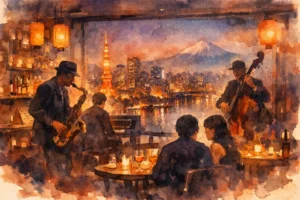

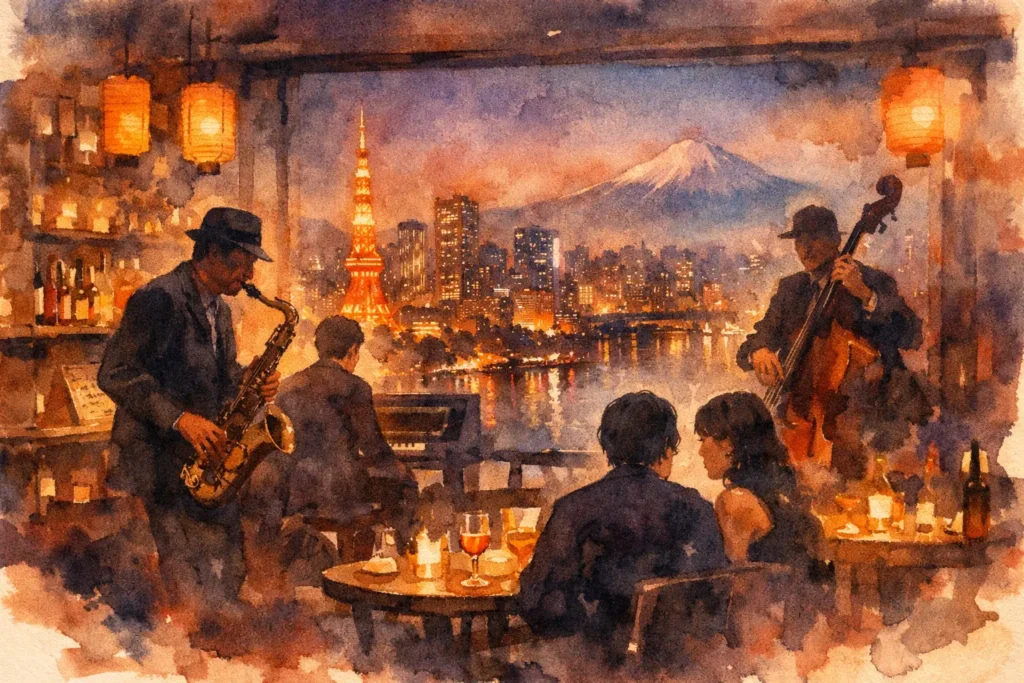
Tokyo jazz bars offer a strikingly different entrance into the capital after dark. Step away from the neon rush of Shinjuku crossings or the polished avenues of Ginza, and you may find a narrow staircase leading to a basement stage, a wood-paneled room filled with vinyl, or a small counter where the music is treated with near-ceremonial attention. This is Tokyo at its most intimate: international in sound, exacting in craft, and deeply shaped by local listening culture.

Jazz arrived in Japan in the early 20th century and found an especially devoted audience after World War II. Over decades, Tokyo built a scene that celebrated both the great American tradition and its own fearless musicians, arrangers, and improvisers. The result is not one nightlife category but a captivating constellation of live clubs, listening bars, and jazz kissaten – coffeehouses dedicated to recorded music. Knowing the difference makes a night out far more rewarding.
Why Tokyo Jazz Bars Feel So Distinctive
In many cities, jazz is background atmosphere. In Tokyo, it is often the reason everyone is in the room. At a listening bar or jazz kissa, conversations may soften as a record begins. At a live venue, the audience follows the solos with attentive focus, then responds with warm, precisely timed applause. That concentration can feel formal at first, but it is also generous. Musicians are given space to take risks, and listeners are invited to hear details that might vanish in a noisier setting.
Tokyo’s devotion to sound is part of the experience. Vinyl collections can run into the thousands, speakers are carefully positioned, and even a modest room may have the acoustic presence of a private listening salon. The city’s compact streets also create an unusual sense of discovery. A remarkable set may be happening behind an unmarked door in Shibuya, a few blocks from a crowded shopping street, while another unfolds in a sophisticated Omotesando club or a historic Shinjuku basement.
There is a trade-off to this intimacy. Many venues are small, schedules can change, and the most sought-after nights may sell out. Yet those limitations are precisely what preserve the feeling that you have entered a real local institution rather than a generic nightlife stop.
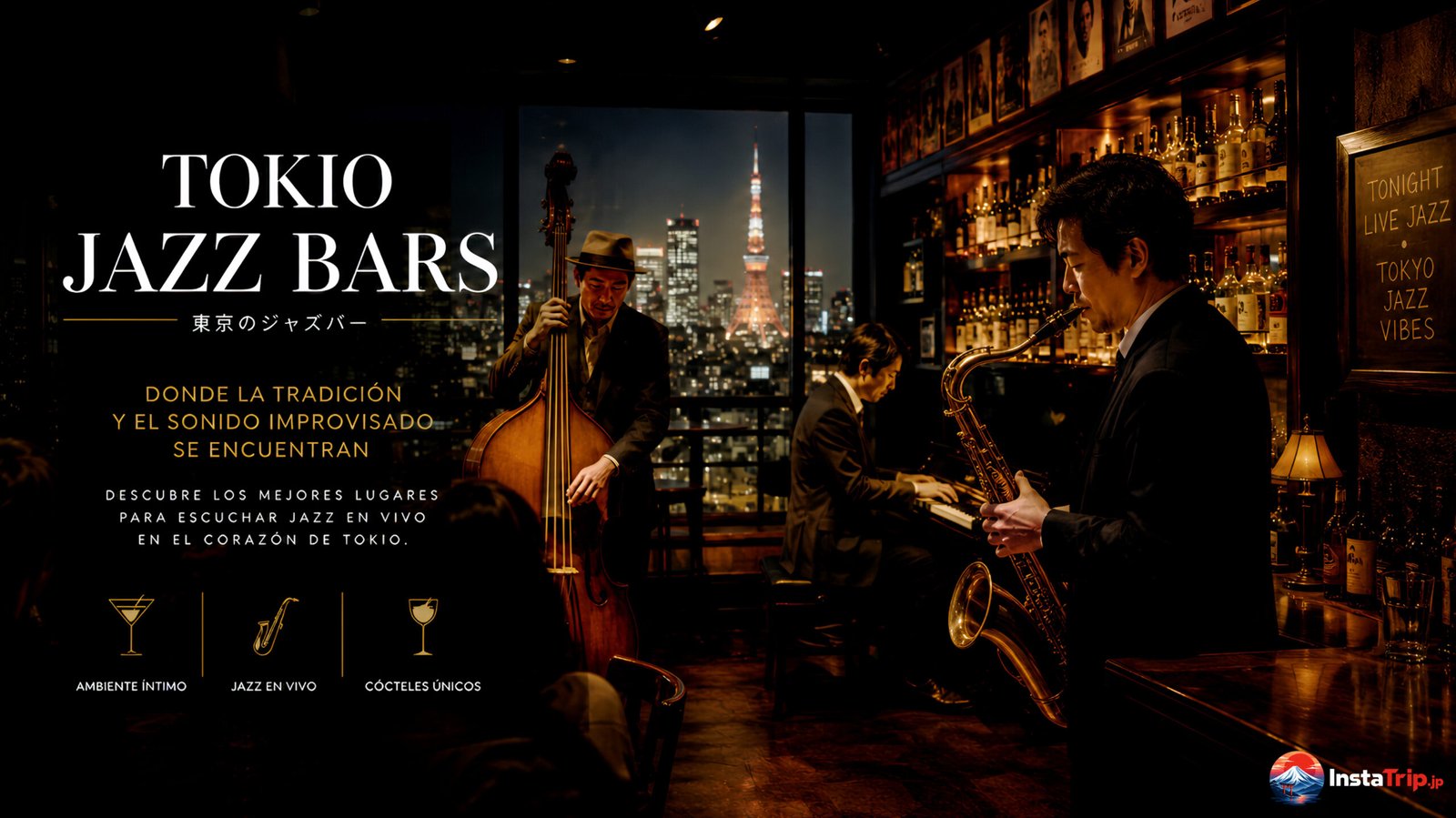
Live Jazz Clubs for a Tokyo Evening
Shinjuku: the historic heartbeat
Shinjuku has long been essential to the city’s jazz identity. Shinjuku Pit Inn, tucked below street level near the neighborhood’s eastern side, is one of Tokyo’s defining venues for adventurous live music. Its compact room, close audience, and ambitious programming have made it a vital stage for Japanese jazz, free improvisation, and visiting artists. This is a place to choose when you want the music to feel immediate rather than polished for spectacle.
Nearby, DUG is a legendary jazz café and bar where the atmosphere is as important as the playlist. Its dark interior, shelves of records, and relaxed daytime-to-evening rhythm make it a natural stop before or after a show. It embodies a central Tokyo pleasure: finding a room that seems to exist outside the city’s relentless pace.
Shinjuku is particularly good for travelers who prefer spontaneity. You can begin with dinner, check the evening’s posted performances, and let the neighborhood lead you toward a set. Still, for headline artists, reserving ahead is the wiser choice.
Aoyama and Omotesando: refined stages, global sound
For a more polished night, Aoyama and Omotesando bring together contemporary Tokyo style and serious musicianship. Blue Note Tokyo is among the city’s best-known live music institutions, hosting internationally recognized performers alongside major Japanese artists. The room is elegant, the production is smooth, and dining is part of the occasion. It suits a celebratory evening, a date night, or travelers who want the certainty of a high-caliber concert in a beautifully run setting.
Body & Soul, in the Minami-Aoyama area, offers another enduring side of the scene. The club is intimate but sophisticated, with a reputation for vocal jazz and leading Japanese players. Rather than feeling like a large concert hall, it retains the closeness that makes Tokyo jazz memorable. The distinction matters: Blue Note Tokyo can feel like an event, while Body & Soul often feels like being welcomed into a room built around musicians and regular listeners.
Kichijoji and beyond the central rush
Kichijoji, west of central Tokyo, rewards visitors who want a neighborhood evening rather than a landmark checklist. The area is known for Inokashira Park, small streets, independent shops, and a creative local character that naturally extends to its music venues. Sometime is one of its familiar jazz destinations, presenting live performances in an approachable, unpretentious setting.
Going beyond the central districts changes the texture of the night. You may spend less time surrounded by major tourist sights, but gain a more residential view of Tokyo’s cultural life. If your trip allows for a slower evening, this is often the better exchange.
The Quiet Magic of Jazz Kissaten
A jazz kissa is not simply a café with a good playlist. These listening spaces emerged as places where people could experience high-quality recordings at a time when owning a serious audio system or a vast jazz collection was far less accessible. They developed into a distinctive Japanese culture of concentrated listening, shaped by the collector’s eye, the café owner’s taste, and the physical character of the room.
In Shibuya, Jazz Blues Soul Bar Lion is celebrated for its imposing speakers and old-world interior. It is a landmark of the form, where recorded music has an almost architectural presence. Order a drink, settle in, and let the room do what it was made to do. The pleasure is not about rushing through a list of songs. It is about hearing an entire album, noticing a saxophone line rise above the rhythm section, and watching a busy district become suddenly quiet.
Jazz kissa etiquette is simple but meaningful. Speak softly, avoid treating the room as a photo set, and follow the house’s rules about seating, ordering, and smoking areas where applicable. Some spaces welcome conversation more readily than others. Read the mood when you arrive. A respectful visitor does not need expert knowledge of jazz, only a willingness to listen.
How to Plan a Great Night of Jazz
Start by deciding what you want from the evening. For a major artist and a full dining-and-show experience, choose a well-established club and book in advance. For a glimpse of Tokyo’s working jazz community, look for a smaller venue in Shinjuku, Kichijoji, or another neighborhood with a scheduled local lineup. If the goal is atmosphere and discovery, a jazz kissa may be more memorable than a concert.
Check the start time carefully. Tokyo venues commonly have specific entry procedures, cover charges, drink minimums, or separate table fees. A show may also have more than one set, with different admission arrangements. Arriving 20 to 30 minutes early gives you time to find a basement entrance, understand the system, and settle in without interrupting the room’s rhythm.
Language should not discourage you. Many venues provide enough English information for basic planning, and staff are accustomed to international guests in popular districts. A few courteous phrases, patience, and attention to posted notices go a long way. Cash remains useful at small establishments, although card acceptance is increasingly common.
Most of all, resist the impulse to pack the evening too tightly. Tokyo rewards wandering, but jazz rewards staying put. Leave time for the walk from the station, the small drink before the first tune, and the silence that follows an exceptional final chorus.
A Different Way to Hear Tokyo
Tokyo’s jazz world reflects one of the city’s most fascinating qualities: its ability to welcome a global art form and cultivate it with remarkable care until it becomes unmistakably local. The music may begin with a standard written far away, but the setting – the low-lit counter, the immaculate sound, the attentive crowd, the rain shining on the pavement outside – belongs entirely to Tokyo.
Choose one room, arrive with curiosity, and give the night your full attention. Somewhere between the first brushed cymbal and the final applause, the city may reveal itself in a new key.