
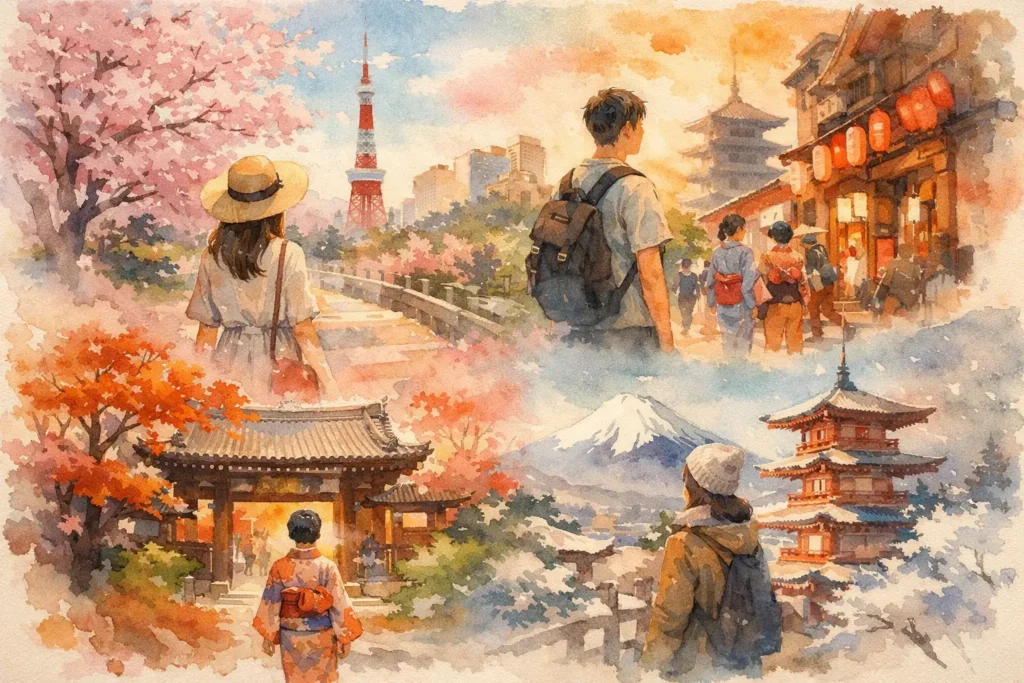
Tokyo reveals itself on foot: under the vermilion gates of Sensō-ji, across the immense Shibuya crossing, through quiet lanes behind Kagurazaka, and high above the city at Tokyo Skytree. The question of what to wear in Tokyo is less about copying a single local look and more about preparing for a fast-moving city of changing weather, long walks, compact indoor spaces, and beautifully varied settings.

Tokyo style can be polished, playful, minimal, vintage-inspired, or strikingly experimental. Visitors do not need to dress formally or chase every trend. The most successful travel wardrobe is comfortable enough for a full day in Asakusa and Ueno, neat enough for a memorable dinner in Ginza, and adaptable enough for a sudden shower or a warm subway platform.
What to Wear in Tokyo: The Essential Approach
Start with clean, well-fitting clothes and shoes you can truly walk in. Tokyo is remarkably efficient, but it is also expansive. A day may include station staircases, museum galleries, shopping streets, shrine grounds, riverside paths, and a late train ride back to your hotel. New shoes, stiff boots, or fashion-first footwear can quickly become a distraction.
Smart casual is the easiest default. Think breathable tops, relaxed trousers, jeans in good condition, midi skirts, uncomplicated dresses, light layers, and a jacket that looks at home in both a café and a department store. Tokyo is diverse, and travelers will see every kind of personal style, especially in creative neighborhoods such as Harajuku, Koenji, and Shimokitazawa. Still, clothing that feels intentionally put together generally fits the rhythm of the city.
Tokyo’s streets are also cleaner and more orderly than many visitors expect. That does not mean you need an elaborate outfit, but a little care goes far. Save beachwear, overly revealing clothing, and clothing with conspicuously offensive slogans for another setting. The goal is not strictness. It is simply to move through a shared urban environment with ease and consideration.
Prioritize shoes, then build around them
Supportive sneakers, cushioned loafers, low boots, or comfortable flats are excellent choices. If your itinerary includes a traditional inn, a temple visit, or a restaurant with tatami seating, shoes may need to come off. Socks without holes are a small but genuinely useful detail, especially in cooler months.
Heels can work for an evening in Roppongi or Ginza, but they are less practical for sightseeing days. Sandals are welcome during hot weather, though a pair with secure straps is much better for station stairs and long walks than flip-flops.
Dress for Tokyo’s Four Distinct Seasons
Tokyo’s wardrobe equation changes dramatically through the year. Humidity, rain, wind, and strong indoor heating or air conditioning can matter as much as the temperature shown on your phone.
Spring: Light layers beneath cherry blossoms
March through May brings one of Tokyo’s most captivating seasons. Cherry blossoms transform parks, temple approaches, and riverbanks, but spring weather can be unexpectedly variable. Early March can still feel cool, while May often brings bright, comfortably warm days.
Pack a light trench, denim jacket, cardigan, or packable insulated layer. Long pants, skirts with tights, and closed-toe shoes suit the earlier part of the season; lighter fabrics become more useful as temperatures rise. A compact umbrella is especially helpful. Tokyo rain is not always dramatic, but a gray, misty afternoon can arrive between otherwise sunny days.
If you are visiting during sakura season, choose clothes that let you linger outdoors. A picnic beneath the blossoms in Ueno Park or along the Meguro River is more enjoyable with a layer for the cooling evening air. Pale colors photograph beautifully against the blossoms, but comfort matters far more than creating a perfect photo.
Summer: Prepare for heat, humidity, and rain
Tokyo summer is vibrant, energetic, and often intensely humid. From June through September, lightweight fabrics are essential. Linen, cotton, moisture-wicking materials, airy dresses, loose shirts, and relaxed trousers can make a substantial difference during long days outdoors.
June and early July coincide with the rainy season, when an umbrella, water-resistant bag, and quick-drying clothing are practical companions. By late July and August, the city can feel hot even after sunset. Carry water, use sunscreen, and consider a small towel or handkerchief, which is common and useful in the heat.
Tank tops and shorts are normal in casual settings, particularly around parks, shopping areas, and festivals. For shrine and temple visits, a little more coverage can feel more appropriate and is often more comfortable in air-conditioned interiors. Keep a light overshirt or thin cardigan in your bag. It protects against sun, cool trains, and powerful air conditioning in museums and department stores.
Summer also brings magnificent matsuri, from neighborhood celebrations to the Sumida River Fireworks Festival. A yukata, the casual summer cotton kimono, can be a lovely choice for a festival if worn thoughtfully and obtained from a reputable rental or dressing service. It is not required, and regular summer clothing is completely welcome. Choose the yukata because you appreciate the experience, not because you feel obligated to wear a costume.
Fall: Tokyo’s easiest season to dress for
Autumn is often the most forgiving time for deciding what to wear in Tokyo. September may retain summer warmth, but October and November often bring crisp air, clear skies, and spectacular foliage in gardens, parks, and temple grounds.
A light jacket, overshirt, knit layer, or blazer works well. Jeans, trousers, long skirts, and ankle boots become especially comfortable. This is a season for walking: from the ginkgo-lined avenues near Meiji Jingu Gaien to the elegant gardens of Rikugien, Tokyo invites unhurried exploration.
Fall is also a strong season for slightly more tailored pieces. A simple black jacket, a neutral sweater, or a refined scarf can take you from daytime galleries in Roppongi to an evening meal without requiring a complete outfit change. Tokyo fashion often embraces restrained palettes, but there is no rule against color. A distinctive accessory can feel right at home in this visually inventive city.
Winter: Warm, polished, and easy to remove indoors
Tokyo winters are generally dry and sunny, though mornings and evenings can be cold. December through February calls for a proper coat, warm knitwear, trousers or thermal layers, and a scarf. Gloves are useful when visiting outdoor viewpoints, strolling through illuminated winter displays, or waiting on station platforms.
Because heated trains, shops, and restaurants can feel warm, wear layers that are easy to remove. A wool coat over a sweater and base layer is often more flexible than one extremely heavy garment. Waterproof footwear is not necessary every day, but shoes with grip are sensible after rain or during an occasional snowy spell.
For New Year shrine visits, winter illuminations, or an elegant dinner, a darker coat and clean shoes are a timeless choice. Tokyo’s winter light has a special clarity, making even an ordinary walk through Marunouchi or Asakusa feel cinematic.
Dressing for Shrines, Temples, and Traditional Spaces
Tokyo’s spiritual landmarks are living places of worship as well as extraordinary cultural sites. Sensō-ji in Asakusa, Meiji Jingu near Harajuku, and Nezu Shrine each have their own atmosphere, but visitors can follow the same simple principle: dress respectfully and behave attentively.
There is no universal dress code requiring formal clothing. Clean, modest casual wear is usually suitable. Avoid clothing that is excessively revealing, and bring a layer if your outfit is very casual or sleeveless. More meaningful than a specific outfit is the way you move through the space: follow posted guidance, keep your voice low where appropriate, and observe rituals before joining them.
Shoes may need to be removed in certain interiors, so easy-to-manage footwear and presentable socks are practical. If you are wearing a hat, taking it off inside a sacred building is a considerate choice.
Match Your Outfit to Tokyo’s Neighborhood Energy
One of Tokyo’s great pleasures is how quickly its atmosphere can change. Ginza’s polished avenues, Akihabara’s electric pop-culture landscape, Daikanyama’s refined cafés, and Shinjuku’s luminous nightlife all belong to the same city, yet each encourages a different mood.
For Ginza, fine dining, or a theater performance, elevate your everyday look with a structured jacket, dressier shoes, or a simple dress. You do not need formalwear for most venues, but athletic clothing may feel out of place at an upscale restaurant. If you have a reservation, checking the restaurant’s stated dress expectations is wise.
Harajuku, Shibuya, and Shimokitazawa are ideal places to enjoy bolder color, vintage finds, graphic pieces, or playful accessories. Tokyo street style is fascinating precisely because it contains many aesthetics at once. Wear what feels like you, rather than treating local fashion as a uniform to imitate.
For Odaiba, waterfront walks, or a day around Tokyo Bay, bring a wind-resistant layer. For hiking trips beyond central Tokyo, including Mount Takao or nearby Hakone, shift from city-smart to trail-ready: grippy shoes, weather protection, and layers are more valuable than a polished silhouette.
A Small Bag Makes Tokyo Days Easier
A crossbody bag or compact backpack is ideal for carrying a water bottle, transit essentials, portable charger, handkerchief, sunscreen, and one extra layer. Keep it streamlined. Crowded trains, narrow shop aisles, and lively food halls are easier to navigate when you are not carrying a large, heavy bag.
Tokyo is a city where attentive preparation creates more freedom. Pack for the season, choose shoes that respect the miles ahead, and leave room for your own sense of style. Then you can focus on what stays with you: lantern-lit temple paths, the scent of rain on summer pavement, autumn leaves in a quiet garden, and the exhilarating glow of the city after dark.